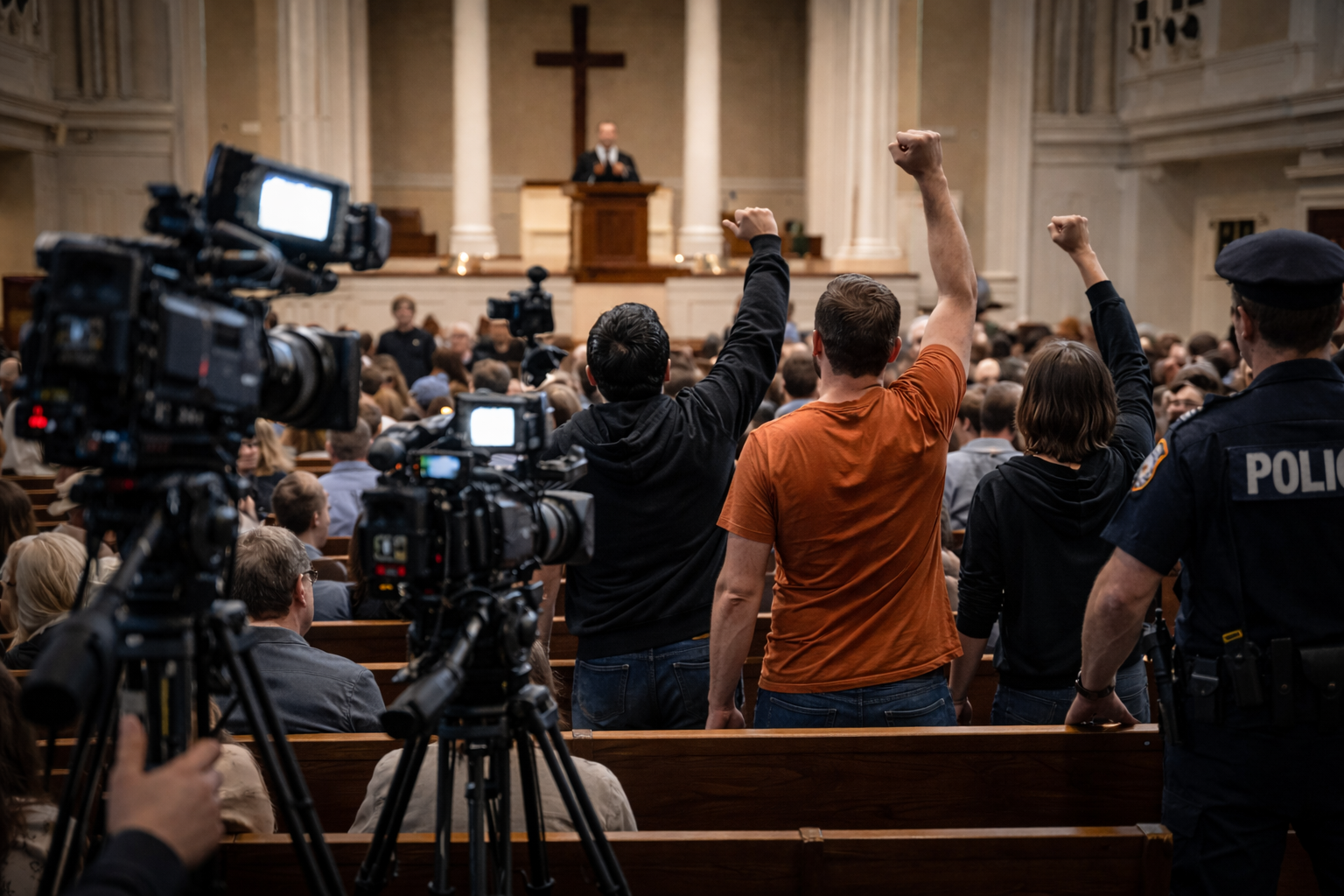
A test of press freedom and selective enforcement around protest coverage
-
This framing centers press freedom and the public’s right to know. Lemon is treated less as an individual defendant and more as a signal case about whether journalists can document high-conflict events without being pulled into criminal liability for being present.
-
The agent is institutional power: law enforcement and prosecutors choosing whom to pursue and how. The concern is not that rules exist, but that discretionary enforcement can function as a warning shot to reporters who cover policing, immigration, or politically sensitive protests.
-
The perceived danger is deterrence. If journalists fear that observing, filming, or interviewing at volatile events can later be reframed as participation, fewer outlets will assign reporters, and the public will see less of what happens when state power and dissent collide.
-
The cause is framed as an expanding tendency to blur observation with complicity. In this view, authorities and sympathetic commentators treat proximity to disruption as evidence of coordination, especially when the underlying issue involves immigration enforcement and contested public space.
-
The lesson is that democratic oversight requires wide latitude for journalists to witness and document controversial events. Press protections, in this framing, matter most when the reporting is uncomfortable and the politics are heated, not only when everyone agrees the coverage is polite or orderly.
They are portrayed as using “law and order” rhetoric to intimidate journalists and narrow what the public is allowed to see, while treating transparency as optional when scrutiny targets power.