United States • Elections • February 2026

The SAVE Act and the Election Integrity Fight

A bill requiring documentary proof of U.S. citizenship for federal voter registration fuels a broader clash over fraud prevention, access, and trust in elections.

Elections Voting rules Trust
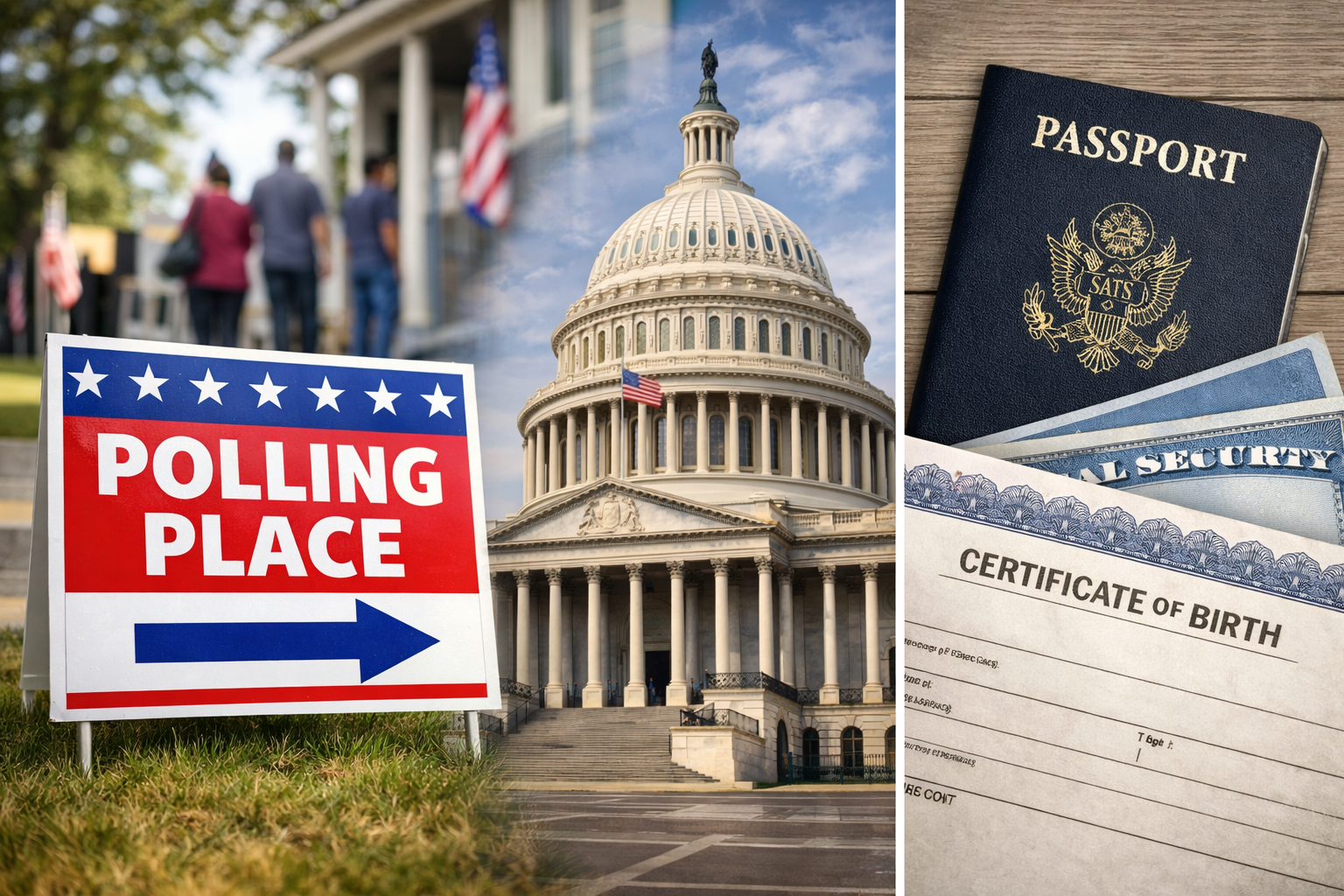
Neutral documentary-style image of a polling place sign and a state capitol building
Left narrative

A voting rights rollback disguised as reform

  • The story centers on citizens who can vote but may not have ready access to documents demanded for registration. The burden is framed as uneven, with extra friction for students, seniors, low-income voters, rural residents, and people with name changes.

  • Proponents are portrayed as using election integrity language to justify stricter rules that shift power toward exclusion. The focus is on legislative design choices that critics say create predictable drop-off among lawful voters.

  • The risk emphasized is not a single dramatic denial, but a broad chilling effect: people miss deadlines, lack documents, or give up. The worry is that close elections could hinge on barriers rather than persuasion.

  • The push is framed as part of a longer fight over legitimacy, fueled by claims that fraud is widespread. Critics argue that those claims often lack verified scale, but still drive laws that tighten access.

  • This narrative calls for targeted enforcement of existing rules, robust voter roll maintenance with due process, and security measures that do not require new document gates for registration.

Demonizing the Other Side:

They are portrayed as hunting for rare fraud to justify broad barriers, then calling the damage to eligible voters a feature, not a bug.

Video perspectives
Ground reality

What is known, what is disputed, and what comes next

  • The SAVE Act is commonly described as requiring documentary proof of U.S. citizenship when registering to vote in federal elections. Supporters say it strengthens verification. Opponents say it adds barriers for lawful voters. The conflict sits inside a larger argument about confidence in election administration.

  • States already use different registration systems and identity checks. Some states have proof-of-citizenship rules for certain steps, while others rely on attestations with penalties for false statements, cross-checks, and list maintenance. Implementation details shape how any federal change would work in practice.

  • A central dispute is magnitude. One side argues that even small numbers of ineligible registrations threaten legitimacy and should be prevented through stricter proof. The other side argues that documented cases are limited and that strict document requirements can affect far more eligible citizens than they stop ineligible voters.

  • If the bill advances, the next steps would include Senate action and any executive response. If enacted, implementation would likely involve federal and state election offices updating registration workflows. Court challenges could follow, especially on federalism, administrative burden, and voter access impacts.

What Each Side Rejects:
  • Left rejects: that broad new document requirements are a harmless technical fix with minimal fallout.
  • Right rejects: that stronger proof rules are inherently voter suppression rather than basic eligibility enforcement.
Video perspectives
Right narrative

A basic citizenship check to secure the ballot

  • The focus is on voters who believe election systems are too permissive. Even a small number of ineligible registrations is treated as unacceptable because elections can be close and legitimacy is fragile.

  • Supporters frame the bill as routine governance: set a clear national standard for federal registration and close loopholes. They argue that asking for proof of citizenship is not extreme, it is obvious.

  • The danger emphasized is a system that relies too much on self-attestation and inconsistent checks. The argument is that lax rules invite doubt, fuel conflict, and make every loss feel suspicious.

  • This narrative points to uneven state processes and bureaucratic reluctance to verify citizenship aggressively. It argues the system needs clearer standards, better checks, and less discretion.

  • The call is to require proof for federal registration, modernize verification, and treat eligibility enforcement as non-negotiable. Any inconvenience is framed as a reasonable cost for trust.

Demonizing the Other Side:

They are portrayed as treating citizenship checks as taboo, then gaslighting the public when voters ask for simple proof.

Video perspectives

Narrative map

The left side treats the main risk as eligible citizens being blocked by new paperwork gates. The right side treats the main risk as eligibility rules that are too soft and too uneven. Both claim to defend democracy, but they define threat differently: one sees exclusion, the other sees dilution and distrust.

← Back to Briefs