United States • Education • Immigration Protests • March 2026

The Politics of Student Walkouts

High school students leaving class to protest immigration enforcement are praised by supporters as civic engagement and criticized by opponents as unsafe political disruption.

Student protest Immigration School discipline
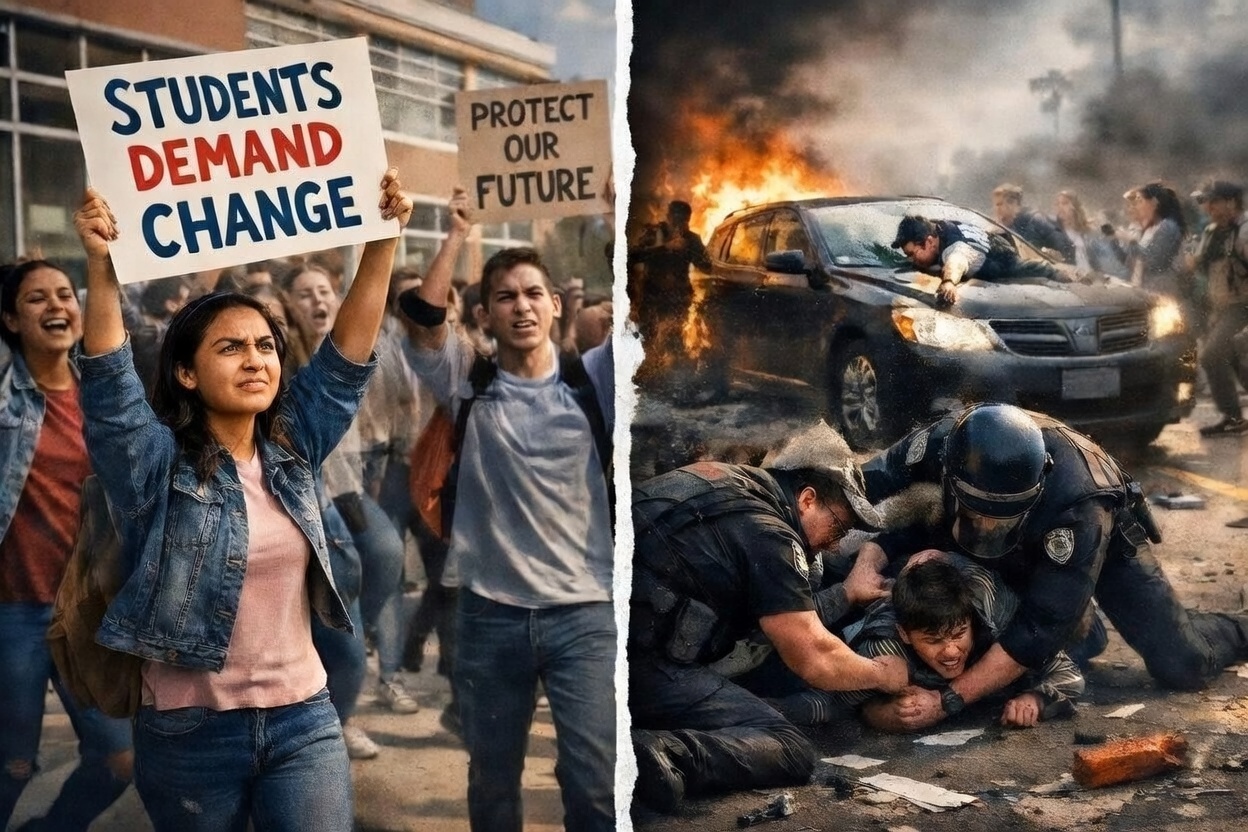
Neutral documentary-style placeholder image representing students, schools, and public protest
Left narrative

Student protest is part of democratic participation

  • Students are framed as members of communities affected by political decisions on issues such as immigration, gun violence, climate change, and war. Supporters argue young people have legitimate stakes in policies that shape their future.

  • Walkouts are presented as student-led demonstrations where young people coordinate with peers to raise awareness and demand change from political leaders and institutions.

  • The danger emphasized is the political issue being protested, whether immigration enforcement, gun violence, environmental policy, or other national debates affecting students and their families.

  • Supporters place student walkouts in a historical tradition of youth activism, pointing to student roles in movements such as civil rights protests, anti-war demonstrations, and gun control advocacy.

  • Advocates argue that participating in peaceful protest can function as a form of civic education. Students learn how political participation works and how collective action can influence public debate.

Demonizing the Other Side:

Critics are portrayed as trying to silence youth activism and discourage students from participating in democratic life.

Video perspectives
Ground reality

What is known, what is disputed, and what comes next

  • Student walkouts against ICE have taken place in cities and school districts across the country as part of a broader protest wave tied to immigration enforcement and anti-ICE organizing.

  • Authorities investigated at least two walkout-related vehicle collisions involving student protesters, including one near Palm Beach Lakes High School in Florida and another at a Fremont High School protest in Nebraska.

  • Supporters describe the walkouts as student-led civic action. Critics argue activist groups, teachers, or outside organizers are steering the protests and shaping the message.

  • Districts are making their own decisions about supervision, absences, discipline, and whether students can protest on campus instead of leaving school grounds.

What Each Side Rejects:
  • Left rejects: the idea that student protest is just disorder or an excuse to skip class.
  • Right rejects: the idea that all walkouts are harmless civic education with no effect on learning, safety, or supervision.
Video perspectives
Right narrative

Walkouts turn schools into political battlegrounds

  • The focus is on classmates whose school day is disrupted, parents who expect supervision, and communities that do not want minors pushed into chaotic public demonstrations.

  • Critics frame the real drivers as activists and adult organizers who normalize walkouts, soften discipline, and turn campuses into recruiting grounds for political causes.

  • The danger emphasized is practical. Students leave supervision, traffic and crowd risks rise, and critics point to documented cases of student protesters being hit by vehicles during anti-ICE walkouts in Nebraska and Florida.

  • This view treats the walkouts as part ideology, part opportunism. Some teenagers may care deeply, but critics argue others will use any excuse to get out of class once protest is rewarded with attention and weak enforcement.

  • The lesson here is that schools should protect instructional time, require discipline for unauthorized walkouts, and avoid treating partisan demonstrations as a substitute for education.

Demonizing the Other Side:

Supporters are portrayed as romanticizing disruption, using minors as political props, and excusing chaos as long as it points in the right direction.

Video perspectives

Narrative map

One side treats the walkouts as young people practicing democracy. The other treats them as schools losing control of mission, time, and safety. Both narratives start with the same image of students leaving class, but they assign very different meaning to what that act teaches.

← Back to Briefs